
Public Works
Sewer Backups
Key Contact
Kerry Grassley
610-374-8273 Ext. 401

Think Before You Flush
Do not flush:
- Tissues and paper towels
- Single-use wipes (cleansing, diaper, etc.)
- Diapers
- Feminine hygiene products
- Disposable toilet brushes
- Disposable gloves
- Cotton swabs
- Dental floss
- Kitty litter
These items don’t break down like toilet paper and can quickly block sewer systems.

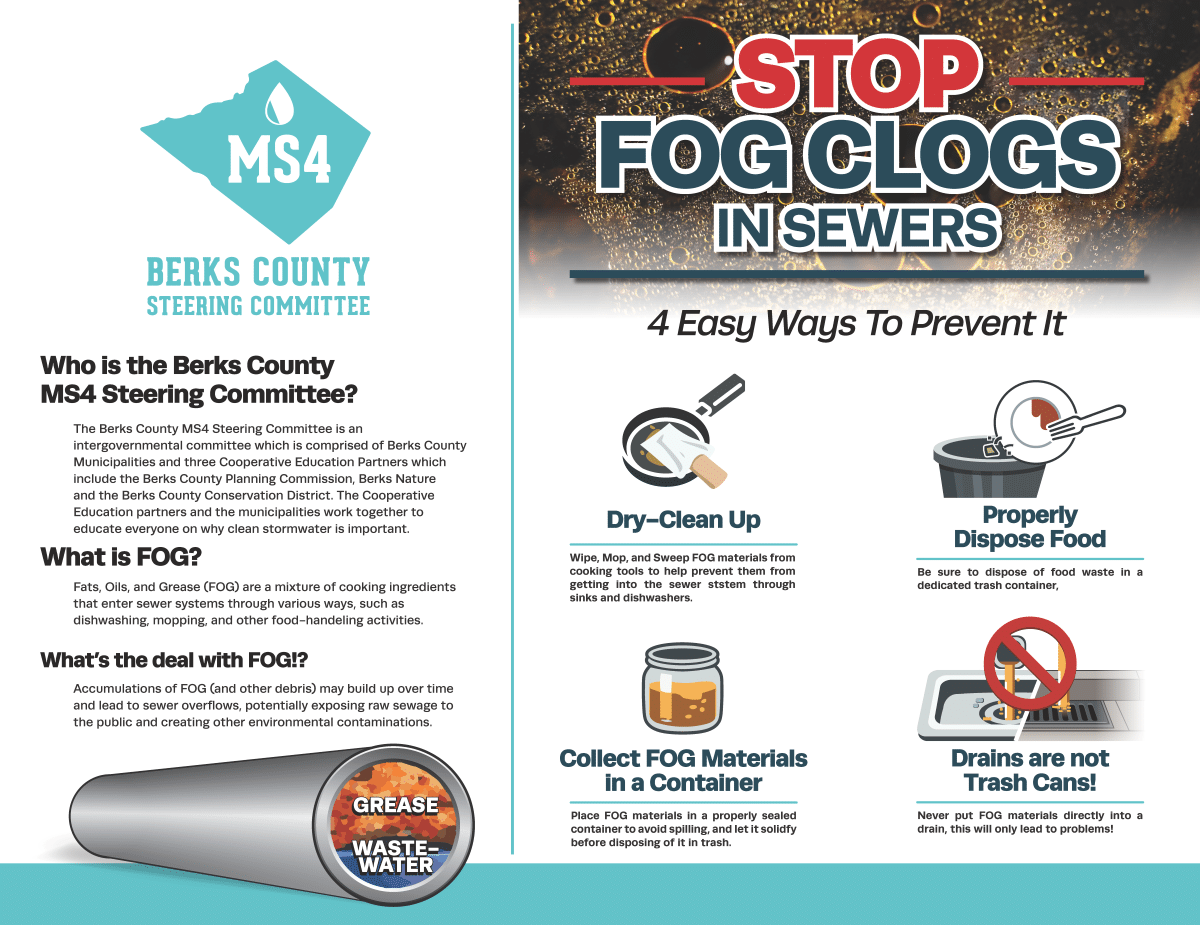
No Grease Down the Drain
Refrain from disposing food scraps, grease, fat, or oil down the drain. These should also be disposed of in the trash to help keep wastewater pipes clear. Grease, fat, and oil can solidify and adhere to the insides of the pipes that carry wastewater from homes and businesses. Over time, these buildups can restrict the flow of wastewater.
Garbage disposals do not prevent grease from washing down the drain. Detergents that claim to dissolve grease may pass it down the line and cause problems in other parts of the wastewater system.
Many sewer blockages occur between the house or business and the sewer main, where the property owner is responsible for correcting and paying for the repair.

Call for Sewer Backups
At any time, day or night, when a sewer backup occurs at your home or business, your first call should be to the Borough. As part of your sewer maintenance fee, the Public Works Department will plunge the sewer trap located near your home/business in an effort to remove the clog, possibly saving you the expense of hiring a plumber. If the clog is located between your home and the curb line, we will notify you that plumbing services are needed. The Borough maintains the sewer system from the curb to the main.
During normal business hours, Monday through Friday, 8:00 AM – 5:00 PM, contact Borough Hall at (610) 374-8273, ext. 221. Outside of normal business hours, contact the non-emergency Police line at (610) 373-0111 to dispatch a member of the Public Works Department to your location.
Beyond FOG: The Growing Threat to Our Wastewater Infrastructure
In the world of wastewater management, the usual suspects, Fats, Oils, and Grease (FOG), have long been recognized as a primary threat to the health and capacity of our sewer systems. When improperly disposed of down residential or commercial drains, these substances cool, solidify, and adhere to the interior of sewer pipes. Over time, the buildup restricts flow, causes backups, and leads to sanitary sewer overflows (SSOs), which release untreated sewage into streets, homes, and local waterways.
FOG is still a problem, but it’s no longer acting alone. A new class of wipes, hygiene products, and fibrous materials is rapidly outpacing FOG as a leading cause of clogged wastewater infrastructure. While awareness of FOG has increased, the rising volume of so-called “flushable” wipes has created a second front in the battle to protect our pipes and the environment.
The Wipe Epidemic: A Modern Infrastructure Crisis
Despite labeling, most wipes marketed as “flushable” do not disintegrate in water the way toilet paper does. A study by the Water Environment Federation (WEF) found that even after 30 minutes of agitation in water, over 90% of “flushable” wipes remained fully intact. Once in the sewer system, these materials combine with FOG, hair, and other debris to form dense, cement-like obstructions known as fatbergs, some of which have grown to weigh several tons.
Estimates now suggest that non-dispersable wipes account for as much as 40% of all blockages in municipal sewer systems, and the cost to municipalities is staggering. The National Association of Clean Water Agencies (NACWA) reports that U.S. utilities spend over $500 million annually on equipment repairs, labor, and emergency response directly related to wipe-induced clogs.
Moreover, nearly 30% of all wipes labeled “flushable” still contain synthetic fibers such as polyester and polypropylene, which do not break down in water or wastewater treatment plants. These fibers also carry microplastics into the environment when they do eventually pass through treatment systems, posing additional ecological risks.
Sewer Overlows and Environmental Impacts
Clogged sewer lines don’t just threaten utility budgets; they endanger public health and natural ecosystems. When blockages cause backups or manhole overflows, untreated sewage can enter nearby streams, rivers, or storm systems. These overflows carry pathogens, nutrients, and pollutants that degrade water quality, harm aquatic life, and make local waterways unsafe for recreation.
Public Misconceptions and Marketing Failures
A large portion of the problem stems from misleading marketing and public misunderstanding. The term “flushable” has no enforceable federal standard in the United States. That means manufacturers can use the term with little regulatory oversight, even if the product doesn’t actually break down once flushed.