Select Language
West Reading Borough
About Us

History of West Reading

By HOWARD F. RICKENBACH, Borough Manager

The Borough of West Reading, Pennsylvania was incorporated as a borough March 18, 1907. It was formed from portions of Spring and Cumru Townships, the greater portion from the former township. Cumru township comprised the southeastern portion of the village before incorporation.

West Reading is bounded on the north by the Lebanon Valley Branch of the Reading Railroad; on the east by the Schuykill River;  on the south by the Wyomissing Creek and on the west by the Borough of Wyomissing. The borough at the present time has a population of 4,914 and an area of 375 acres. The population is housed in 1,115 residential dwellings and apartment buildings.

West Reading’s real growth commenced in 1873 when a plan of lots was developed by Frederick R. Brill, the principal land owner of the section in those days. Prior to that time there were only a few houses in the area, principally along the Berks and Dauphin turnpike, now Penn Avenue. The brick house which was occupied for many years by William Hinnershitz and which was demolished after his death a decade ago was probably the oldest house in this section, having been erected about 1810. The house which was located on the north side of the pike opposite River Road, was owned for many years by Samuel Bell. A tavern was conducted in the structure by Abraham Krick. There was a small stone house at the southeast intersection of River Road and the Pike. Then there were three other structures and a large barn on the land which later became a part of the Eckert estate.

Farther west, beyond the toll gate which stood on the south side of the street between present day Fourth Avenue and Tulpehocken Avenue, there were six buildings. North and south of the Berks and Dauphin turnpike there were only rolling acres of farm lands.

The principal structure west of the toll gate was the tavern now known as the West Reading Hotel. It has been hostelry of prominence for more than a hundred years. The ground on which it stands can be traced back to 1738 when it was part of three hundred acres, which John and William Penn, the proprietaries of the Province of Pennsylvania, deeded to David Lewis.
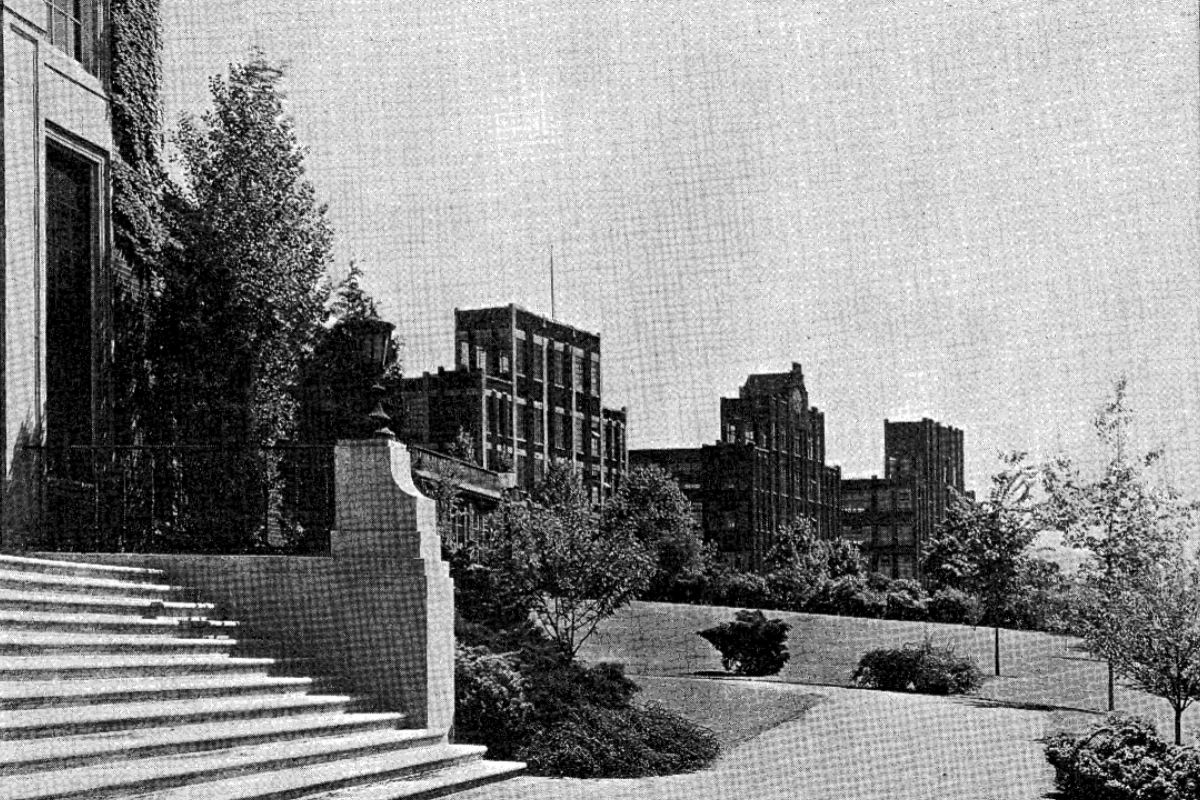
The History of West Reading
Police Department 1941 |The History of West Reading
Reading Hospital 1941 | The History of West Reading
West Reading Hotel | The History of West Reading
Message from Howard F. Rickenbach 1819

1733

Three Welshmen- Hugh Jones, David Lewis, and Evan Price were the first settlers to be granted warrants for the land west of the Schuylkill River.

1810

A brick home, one the first buildings in what would become West Reading, is erected and occupied by William Hinnershitz.

1857

The Lebanon Valley Railroad Bridge is completed.

1873

Frederick Frill laid out his plan of lots on land which consisted of about 90 acres. The Frill plan covered land that was north of Chestnut Street and east of Tulpehocken Avenue.

1874

George Eckert purchased a block of lots along Penn Avenue, extending from Second to Third Avenue.

1876

The largest industry was the Alexander Hat Factory at First Avenue and Franklin Street.

1877

The Lebanon Valley Railroad bridge was destroyed during the railroad riot.

1884

The Penn Street Bridge is replaced with one made with steel trusses.

1898

Spring Township builds a new eight-room brick school building on the northeast corner of Fifth Avenue and Chestnut Street.

1901

West Reading Fire Company No. 1 is incorporated.

1907

On March 18th, West Reading is incorporated as a Borough. The first public election is held at John Kintzer’s public house; the first Borough officials are elected. In addition, West Reading’s Board of Education is organized; the first school sessions for the West Reading School District are held at a school building on the corner of 5th and Chestnut Streets.

1908

Sessions for grades 7and 8 are held in a private house on the southeast corner of 5th and Franklin Streets.

1910

A two-story brick engine house is erected in the 400 block of Franklin Street.

1913

The steel truss Penn Avenue bridge is replaced with a concrete arch bridge.

1914

West Reading High School is built on the corner of 4th and Franklin Streets.

1919

The largest industry in West Reading is Narrow Fabric Co., manufacturer of undergarments.

1923

The Borough police force is established with one police officer. A new auditorium/gymnasium was added to the high school.

1925

The West Side News, a monthly newspaper published and distributed in the Borough, begins a nearly 40-year run.

1926

The Borough acquires property at South Fifth Avenue and Chestnut Street for the new borough hall, which is completed the following year. Final construction of the east and west classroom wings and library are added to the high school.

1929

Borough Council decides to construct a new playground on 16 acres at Westside Road (now called Museum Road) and Sycamore Road.

1932

The Buttonwood Street Bridge is built between West Reading and Reading.

1939

Wyomissing Industries presents the citizens of West Reading with a $25,000 stone field house for the borough playground, which is now a well-rounded recreational facility with a swimming pool, wading pool, athletic field, quarter-mile track, ice skating rink, and basketball, volleyball and tennis courts.

1950

West Reading is the largest of the county’s 30 boroughs.

1953

The new West Reading Elementary building is constructed on the northwest corner of 4th and Chestnut Streets.

1954

The school building located at Fifth Avenue and Chestnut Street is razed to provide space for a school play area.

1968

West Reading Borough Council joins two other boroughs- Shillington and Wyomissing- in the formation of a regional water supply system, later to be known as the Western Berks Water Authority, to “collect, treat, and transmit water from the contemplated Blue Marsh Dam area and sell it to prospective customers.”

1969

The West Reading and Wyomissing School Districts merge.

1985

The Wyomissing Area School District sells the West Reading High School Building. The building becomes the “Public School Commons” apartments.

1999

The “Main Street” project begins the revitalization of Penn Avenue.

2002

A new fire station is erected at Parkview Road and Playground Drive.

2005

West Reading Borough Council joins with the Borough of Wyomissing, Spring Township, and Sinking Spring Borough to create the West Side Emergency Management Agency.

2006

Penn View Motel demolition begins. In addition, the former Neg-Tech building at Chestnut and Yarnell Streets is demolished- making way for three new townhouses. Construction begins with 58 new townhouses on the former Narrow Fabric property west of Tulpehocken Avenue.

2017

The Berkshire Knitting Mills, once the world’s largest hosiery manufacturer, which occupied the site from early 1900’s until its purchase in 1969 by Vanity Fair Corporation underwent renovations to transform the four-story building into an office and retail campus known as the Knitting Mills.

2018

The former Narrow Fabric manufacturing building underwent renovations with a restaurant and gym located on the first floor and the top three floors featuring one and two-bedroom apartments.

2022

First woman elected to serve as Mayor of West Reading.

2023

On March 24, 2023 around 4:57 p.m. an explosion occurred at R.M. Palmer Company’s building #2. Seven people died and ten were injured, including one rescued from rubble. The explosion sent plumes of smoke into the air and shook homes. Investigators determined the cause, which was connected to a gas leak. American Red Cross Hero Article
Berkshire Knitting Mills
Metropolitan Edison Company
Penn Street Bridge 1913
Penn Street Bridge Prior to 1914
Borough Hall 1941
Police Cadets Drum & Bugle Corps 1941
Police Department 1941
Reading Hospital 1941
West Reading Hotel

By HOWARD F. RICKENBACH, Borough Manager

The Borough of West Reading, Pennsylvania was incorporated as a borough March 18, 1907. It was formed from portions of Spring and Cumru Townships, the greater portion from the former township. Cumru township comprised the southeastern portion of the village before incorporation.

West Reading is bounded on the north by the Lebanon Valley Branch of the Reading Railroad; on the east by the Schuykill River;  on the south by the Wyomissing Creek and on the west by the Borough of Wyomissing. The borough at the present time has a population of 4,914 and an area of 375 acres. The population is housed in 1,115 residential dwellings and apartment buildings.

West Reading’s real growth commenced in 1873 when a plan of lots was developed by Frederick R. Brill, the principal land owner of the section in those days. Prior to that time there were only a few houses in the area, principally along the Berks and Dauphin turnpike, now Penn Avenue. The brick house which was occupied for many years by William Hinnershitz and which was demolished after his death a decade ago was probably the oldest house in this section, having been erected about 1810. The house which was located on the north side of the pike opposite River Road, was owned for many years by Samuel Bell. A tavern was conducted in the structure by Abraham Krick. There was a small stone house at the southeast intersection of River Road and the Pike. Then there were three other structures and a large barn on the land which later became a part of the Eckert estate.

Farther west, beyond the toll gate which stood on the south side of the street between present day Fourth Avenue and Tulpehocken Avenue, there were six buildings. North and south of the Berks and Dauphin turnpike there were only rolling acres of farm lands.

The principal structure west of the toll gate was the tavern now known as the West Reading Hotel. It has been hostelry of prominence for more than a hundred years. The ground on which it stands can be traced back to 1738 when it was part of three hundred acres, which John and William Penn, the proprietaries of the Province of Pennsylvania, deeded to David Lewis.

1733

Three Welshmen- Hugh Jones, David Lewis, and Evan Price were the first settlers to be granted warrants for the land west of the Schuylkill River.

1810

A brick home, one the first buildings in what would become West Reading, is erected and occupied by William Hinnershitz.

1857

The Lebanon Valley Railroad Bridge is completed.

1873

Frederick Frill laid out his plan of lots on land which consisted of about 90 acres. The Frill plan covered land that was north of Chestnut Street and east of Tulpehocken Avenue.

1874

George Eckert purchased a block of lots along Penn Avenue, extending from Second to Third Avenue.

1876

The largest industry was the Alexander Hat Factory at First Avenue and Franklin Street.

1877

The Lebanon Valley Railroad bridge was destroyed during the railroad riot.

1884

The Penn Street Bridge is replaced with one made with steel trusses.

1898

Spring Township builds a new eight-room brick school building on the northeast corner of Fifth Avenue and Chestnut Street.

1901

West Reading Fire Company No. 1 is incorporated.

1907

On March 18th, West Reading is incorporated as a Borough. The first public election is held at John Kintzer’s public house; the first Borough officials are elected. In addition, West Reading’s Board of Education is organized; the first school sessions for the West Reading School District are held at a school building on the corner of 5th and Chestnut Streets.

1908

Sessions for grades 7and 8 are held in a private house on the southeast corner of 5th and Franklin Streets.

1910

A two-story brick engine house is erected in the 400 block of Franklin Street.

1913

The steel truss Penn Avenue bridge is replaced with a concrete arch bridge.

1914

West Reading High School is built on the corner of 4th and Franklin Streets.

1919

The largest industry in West Reading is Narrow Fabric Co., manufacturer of undergarments.

1923

The Borough police force is established with one police officer. A new auditorium/gymnasium was added to the high school.

1925

The West Side News, a monthly newspaper published and distributed in the Borough, begins a nearly 40-year run.

1926

The Borough acquires property at South Fifth Avenue and Chestnut Street for the new borough hall, which is completed the following year. Final construction of the east and west classroom wings and library are added to the high school.

1929

Borough Council decides to construct a new playground on 16 acres at Westside Road (now called Museum Road) and Sycamore Road.

1932

The Buttonwood Street Bridge is built between West Reading and Reading.

1939

Wyomissing Industries presents the citizens of West Reading with a $25,000 stone field house for the borough playground, which is now a well-rounded recreational facility with a swimming pool, wading pool, athletic field, quarter-mile track, ice skating rink, and basketball, volleyball and tennis courts.

1950

West Reading is the largest of the county’s 30 boroughs.

1953

The new West Reading Elementary building is constructed on the northwest corner of 4th and Chestnut Streets.

1954

The school building located at Fifth Avenue and Chestnut Street is razed to provide space for a school play area.

1968

West Reading Borough Council joins two other boroughs- Shillington and Wyomissing- in the formation of a regional water supply system, later to be known as the Western Berks Water Authority, to “collect, treat, and transmit water from the contemplated Blue Marsh Dam area and sell it to prospective customers.”

1969

The West Reading and Wyomissing School Districts merge.

1985

The Wyomissing Area School District sells the West Reading High School Building. The building becomes the “Public School Commons” apartments.

1999

The “Main Street” project begins the revitalization of Penn Avenue.

2002

A new fire station is erected at Parkview Road and Playground Drive.

2005

West Reading Borough Council joins with the Borough of Wyomissing, Spring Township, and Sinking Spring Borough to create the West Side Emergency Management Agency.

2006

Penn View Motel demolition begins. In addition, the former Neg-Tech building at Chestnut and Yarnell Streets is demolished- making way for three new townhouses. Construction begins with 58 new townhouses on the former Narrow Fabric property west of Tulpehocken Avenue.

2017

The Berkshire Knitting Mills, once the world’s largest hosiery manufacturer, which occupied the site from early 1900’s until its purchase in 1969 by Vanity Fair Corporation underwent renovations to transform the four-story building into an office and retail campus known as the Knitting Mills.

2018

The former Narrow Fabric manufacturing building underwent renovations with a restaurant and gym located on the first floor and the top three floors featuring one and two-bedroom apartments.

2022

First woman elected to serve as Mayor of West Reading.

2023

On March 24, 2023 around 4:57 p.m. an explosion occurred at R.M. Palmer Company’s building #2. Seven people died and ten were injured, including one rescued from rubble. The explosion sent plumes of smoke into the air and shook homes. Investigators determined the cause, which was connected to a gas leak. American Red Cross Hero Article